
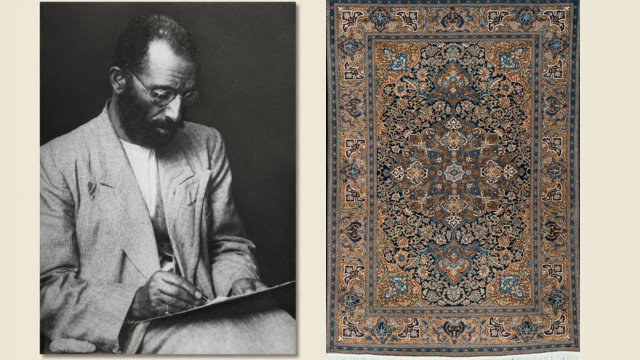
Persian carpets are admired around the world for their artistic designs, detailed craftsmanship, and cultural significance. Among the names associated with traditional Persian art is Mirza Agha Emami, an Iranian artist and craftsman connected with the artistic heritage of Isfahan.
For homeowners, interior designers, and collectors in Thailand, understanding the artistic background of Persian carpets can make choosing a handmade rug more meaningful. A Persian carpet is not simply a decorative accessory. Its patterns, materials, colors, and construction contribute to the character of a living space.
At Safa Carpet Gallery, we appreciate the beauty of Persian carpet craftsmanship and its place in traditional and contemporary interiors. This guide explores Mirza Agha Emami, the artistic traditions associated with Isfahan, important carpet characteristics, and practical considerations for choosing Persian rugs in Bangkok and across Thailand.
Mirza Agha Emami is associated with the artistic tradition of Isfahan, Iran, a city recognized for its rich history of Persian architecture, painting, decorative arts, and craftsmanship.
The name Emami is connected with the broader artistic heritage of Isfahan. However, it is important to distinguish between an artist’s individual work, workshop production, and carpets that are attributed to a particular artistic tradition.
When researching Mirza Agha Emami Persian carpets, buyers should pay attention to the specific provenance and attribution of each piece rather than assuming that every carpet associated with the name was personally designed or signed by the artist.
This distinction is particularly important for collectors who are interested in historical Persian carpets and want to understand the background of a particular rug.
Isfahan has long been associated with Persian artistic excellence. Its architectural monuments, decorative tilework, miniature painting, and traditional crafts demonstrate the importance of geometry, symmetry, and detailed ornamentation in Persian art.
These artistic traditions provide useful context for understanding the visual language of Persian carpets.
Traditional Persian designs frequently incorporate:
Although carpet designs vary by region, workshop, and period, the relationship between architecture and decorative arts is an important part of Isfahan’s cultural identity.
When exploring Mirza Agha Emami’s artistic background, it is useful to consider the broader environment of Isfahan’s traditional arts.
Persian artistic traditions often combine intricate detail with carefully organized compositions. This approach can be seen across different forms of decorative art, including painting, architecture, and textile design.
For carpet collectors, the most important consideration is the documented connection between a particular piece and the artist or workshop.
A reliable attribution should be supported by available information about the carpet’s origin, age, design, construction, and ownership history.
Persian carpets are known for their distinctive visual styles. Their designs can range from highly detailed floral compositions to geometric patterns and pictorial scenes.
Floral designs are among the most recognizable elements of Persian carpet artistry.
These patterns may include flowers, leaves, vines, branches, and interconnected decorative elements. Their arrangement can create a sense of movement while maintaining visual balance.
A floral Persian rug can complement traditional interiors as well as contemporary homes in Bangkok.
Medallion carpets typically feature a central decorative element surrounded by a structured field and border.
The central medallion provides a visual focal point, while the surrounding patterns help create a balanced composition.
For a living room, a medallion rug can work particularly well when the furniture arrangement allows the central design to remain visible.
Pictorial rugs feature recognizable scenes, figures, landscapes, animals, or other visual subjects.
These carpets are often appreciated as decorative artworks because their designs communicate more than a repeating geometric pattern.
Collectors should examine the details of the composition and the carpet’s documented background when considering a pictorial piece.
Understanding materials and construction is essential when choosing a Persian carpet.
Wool is widely used in traditional Persian carpet production.
Its natural texture, resilience, and appearance make it suitable for many residential interiors.
A wool Persian rug can be an attractive option for living rooms, bedrooms, and other spaces where a comfortable surface is desired.
Silk can provide a finer appearance and a distinctive sheen.
Some Persian carpets use silk in the foundation, pile, or decorative details. The material and its role in the construction should be confirmed for each individual rug.
Silk carpets may require more careful placement and maintenance depending on their construction and condition.
Hand-knotted Persian carpets are made by tying individual knots into the foundation.
This process requires considerable time and skill. The construction, materials, and finishing details influence the appearance and characteristics of the finished carpet.
If you are learning about handmade Persian rugs, read our guide: What Are Hand-Knotted Persian Rugs?
It explains the basic construction and characteristics of hand-knotted carpets.
Choosing a Persian carpet for a home in Bangkok requires considering the room, furniture, materials, and overall interior style.
The carpet should complement the proportions of the room.
For a living room, consider how the rug will sit beneath or around the seating arrangement.
A larger rug can help visually connect furniture pieces, while a smaller rug may work better in a compact space.
Measure the intended area before selecting a carpet.
Bangkok homes include a wide range of interior styles, from contemporary condominiums to traditional residences.
Neutral colors can complement minimalist interiors, while deeper red, blue, ivory, and other traditional Persian tones can create a stronger visual focal point.
Consider the existing furniture, flooring, curtains, and natural lighting before making a decision.
Ask whether the carpet is made from wool, silk, cotton, or a combination of materials.
The material affects the carpet’s appearance, texture, maintenance requirements, and suitability for different rooms.
Do not assume that a carpet is entirely silk or wool based only on its appearance.
Look at the carpet’s back, edges, foundation, pile, and finishing.
Hand-knotted construction can often be identified through the structure of the knots and the relationship between the pile and foundation.
However, no single visual detail should be treated as conclusive proof of a carpet’s origin or authenticity.
If a carpet is presented as an antique or attributed to Mirza Agha Emami, ask what documentation supports that description.
Useful information may include:
A careful approach helps buyers understand what is known and what remains uncertain.
For more guidance, read: How to Identify Authentic Persian Rugs
Persian carpets can complement different interior styles throughout Bangkok.
In modern condominiums, a Persian rug can introduce texture, pattern, and visual warmth.
A carefully selected design can create contrast against simple furniture and neutral flooring.
Consider the available space and avoid choosing a rug that overwhelms the room.
Traditional interiors may work well with detailed floral designs, medallion patterns, and rich colors.
The carpet can complement wooden furniture, decorative objects, and classic architectural elements.
For luxury interiors, the quality of the materials, construction, condition, and design should be considered together.
A carpet should be selected according to the overall interior rather than simply because it is described as luxurious.
Interior designers in Bangkok may also consider how a rug connects different furniture pieces and establishes a focal point within a room.
Thailand’s warm and humid climate makes appropriate carpet care especially important.
Humidity, dust, sunlight, and everyday use can affect carpets over time.
Regular gentle vacuuming helps remove dust and loose dirt.
Use a suitable vacuum setting and avoid aggressive treatment that could damage delicate fibers or fringes.
Do not leave a Persian carpet damp for extended periods.
Moisture can contribute to unpleasant odors and may damage the carpet depending on its materials and construction.
If the carpet becomes wet, seek appropriate cleaning and drying advice.
Strong sunlight can gradually affect carpet colors.
Where possible, use curtains or other appropriate measures to reduce prolonged direct exposure.
Antique, silk, and delicate Persian carpets may require specialized care.
Before using cleaning products or treatments, confirm that they are suitable for the carpet’s materials.
For additional advice, visit: Persian Rug Care Tips
The value of a Persian carpet depends on several characteristics.
Age alone does not determine value.
The carpet’s condition, originality, previous repairs, and documented history are also important.
The quality of the materials and the skill involved in construction can influence the carpet’s desirability.
Fine workmanship should be evaluated alongside the overall condition and design.
A distinctive design or credible connection to a recognized artist or workshop may influence collector interest.
However, attribution should be supported by appropriate evidence.
A carpet should not be considered an original work by Mirza Agha Emami simply because its design resembles a particular artistic tradition.
Documentation can help establish a carpet’s history and provide context for its attribution.
For collectors, reliable information is more useful than unsupported claims about age, rarity, or ownership.
Safa Carpet Gallery offers Persian carpets for people interested in traditional craftsmanship, decorative designs, and handmade rugs.
When exploring a Persian carpet collection, consider the rug’s dimensions, materials, design, condition, and suitability for your home.
Whether you are furnishing a condominium in Sukhumvit, decorating a residence in Phrom Phong, or planning an interior project in another part of Bangkok, selecting a carpet that complements the space is an important part of the process.
You can explore the available collection at: Safa Carpet Gallery
For buyers interested in traditional Persian craftsmanship, understanding the differences between individual carpets can help make the selection process more informed.
Mirza Agha Emami is associated with the artistic heritage of Isfahan, Iran. When researching carpets attributed to him, buyers should verify the specific piece’s provenance and attribution.
Isfahan is recognized for its artistic traditions, including detailed decorative designs, balanced compositions, and intricate ornamentation. Individual carpets vary in design, materials, and construction.
Yes. Persian carpets can complement contemporary condominiums, traditional homes, and luxury interiors. The most suitable carpet depends on room size, furniture, colors, materials, and personal preferences.
Examine its construction, materials, design, condition, and available provenance. For antique or artist-attributed carpets, seek credible documentation and expert evaluation.
Keep the carpet clean, avoid excessive moisture, protect it from prolonged direct sunlight, and use appropriate professional cleaning when necessary.
Mirza Agha Emami represents a subject of interest within the broader artistic heritage of Isfahan and Persian decorative arts.
For buyers in Thailand, exploring this artistic background offers a starting point for understanding Persian carpet designs, craftsmanship, materials, and cultural context.
When choosing a Persian carpet in Bangkok, focus on the individual rug’s construction, condition, design, and documented history. These details provide a more reliable foundation for selecting a carpet that suits your home and personal taste.
At Safa Carpet Gallery, Persian carpets offer an opportunity to bring traditional craftsmanship and distinctive decorative patterns into contemporary Thai interiors.