
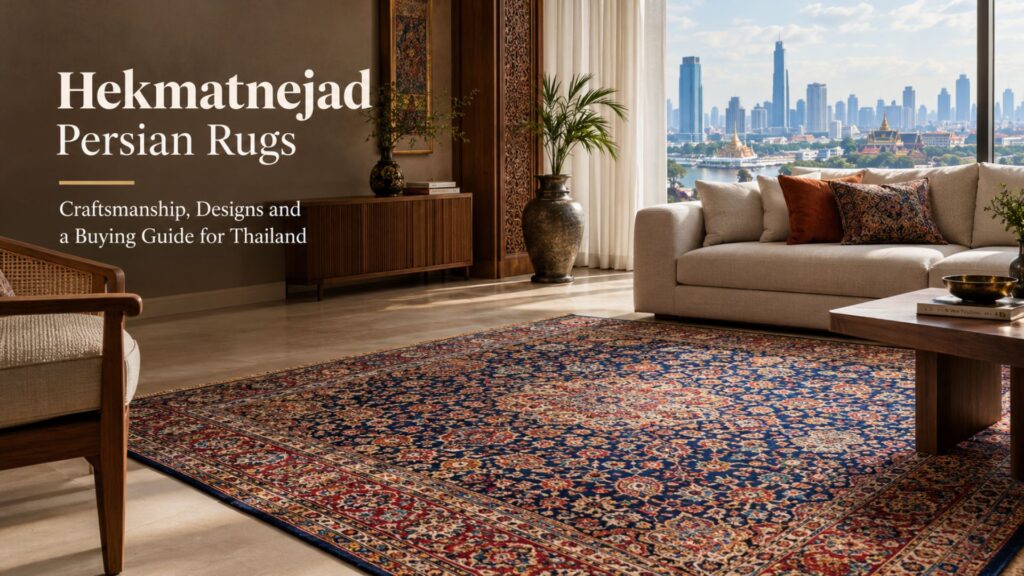
A fine Persian rug can transform a room without changing the furniture, lighting or overall layout. Its intricate patterns, carefully selected colours and handmade construction bring warmth and character to an interior. For homeowners and collectors exploring traditional Persian carpets, Hekmatnejad Persian rugs are a name worth discovering.
At Safa Carpet Gallery, Hekmatnejad is featured among the Persian carpet makers represented in the collection. For buyers in Thailand, understanding a rug’s craftsmanship, materials, design and authenticity is essential before choosing a piece for a condominium, private residence, luxury villa or hospitality space.
Whether you are searching for authentic Persian rugs in Bangkok, a distinctive handmade carpet for your living room or a traditional piece for a carefully designed interior, this guide explains what to consider when exploring Hekmatnejad carpets.
The name Hekmatnejad appears in Safa Carpet Gallery’s collection of Persian carpet makers, including pieces attributed to Hassan Hekmatnejad. Each individual rug should be assessed according to its documented maker, origin, materials, construction and condition rather than relying on the name alone. Explore the Hekmatnejad collection.
Traditional Persian carpet weaving combines design, material selection and skilled manual work. In a hand-knotted rug, individual knots create the pile and help form the design. The amount of detail, the materials used and the precision of the weaving all influence the finished appearance.
For buyers considering handmade Persian rugs, the appeal lies in more than decoration. A carefully selected carpet can become a defining feature of a room, connecting traditional craftsmanship with contemporary interior design.
Not every Persian carpet has the same character. Rugs can differ in their patterns, colours, proportions, materials, knotting, age and condition.
When examining Hekmatnejad carpets, consider the details of the individual piece. Ask for its available product information and examine its construction rather than assuming that every rug associated with a particular maker has identical characteristics.
Choosing a Persian carpet involves balancing visual appeal with practical considerations. A rug may have an attractive pattern, but its suitability for your home also depends on its material, size, construction and condition.
Persian rugs are appreciated for a wide range of designs, including floral compositions, central medallions, geometric arrangements and elaborate borders. These patterns can create different visual effects depending on their scale, colour and level of detail.
When choosing a rug, consider how its design interacts with your existing furniture. A detailed pattern can add interest to a simple room, while a more restrained colour palette may complement an interior that already includes decorative furniture, artwork or patterned fabrics.
Rather than choosing a carpet based on photographs alone, examine the actual rug whenever possible. The scale of its motifs, the depth of its colours and the texture of its surface can look different in person.
The materials used in a Persian rug influence its texture, appearance and maintenance requirements. Wool is valued for its comfortable feel and practical qualities, while silk can provide a finer surface and allow intricate details to stand out. Some carpets combine materials to balance different characteristics.
Check the product description to establish whether the rug is made from wool, silk or a combination of fibres. Also ask about the foundation, knotting method and any available information concerning its manufacture.
For a more detailed explanation of construction, read our guide to What Are Hand-Knotted Persian Rugs?.
Colour can determine whether a rug blends into a room or becomes its main visual feature. Deep blue, red, ivory, beige and other traditional shades can work in different settings, depending on the pattern and surrounding decor.
Before choosing a carpet, consider your flooring, wall colour, sofa upholstery and natural lighting. Bring photographs of the room when visiting a showroom, or compare the rug with your existing materials where practical.
The goal is not simply to match every colour. A well-chosen Persian rug should create visual balance while retaining enough contrast to give the room personality.
Interior spaces in Bangkok range from compact condominiums to spacious houses and luxury villas. A Persian rug should suit the proportions and everyday use of the space rather than being selected on appearance alone.
In a condominium, the right rug can help define the living area without requiring additional furniture or permanent alterations. Start by measuring the available floor space and considering how the rug will sit beneath or in front of your sofa.
A rug that is too small may appear disconnected from the seating arrangement, while an oversized piece can make a compact room feel crowded. Consider the placement of doors, walkways and furniture legs before deciding on the dimensions.
For smaller interiors, pay attention to the relationship between the pattern and the room’s visual scale. A design that complements the existing furniture can create a more coordinated atmosphere without overwhelming the space.
Larger interiors offer more opportunities to use Persian carpets as focal points. In a spacious living room, a carefully positioned rug can bring separate seating pieces together and establish a clear centre for the room.
For villas, hotel suites and formal reception areas, consider the carpet’s dimensions, colour palette and intended level of use. High-traffic spaces may require more careful material selection and a realistic maintenance plan.
If you are comparing luxury rugs in Bangkok, evaluate the overall quality and suitability of each piece instead of treating size or price as the only indicators of value.
Persian carpets can complement a variety of interior styles found in Thailand. In a contemporary Bangkok home, a traditional rug can introduce texture and visual depth alongside clean lines and neutral furniture.
For interiors featuring natural wood, stone, woven accessories or warm earthy tones, consider a rug whose colours connect with these materials. In a more contemporary setting, a contrasting pattern can create a distinctive centrepiece.
Lighting also matters. Compare the carpet under the type of lighting used in your room, because artificial light and daylight can affect how colours appear.
When buying an expensive or collectible carpet, appearance should be only one part of your decision. Understanding its construction, origin and condition helps you make a more informed choice.
If possible, inspect the front and back of the rug. Individual knots may be visible on the reverse of a hand-knotted carpet. Look at the pattern, edges, pile and finishing, paying attention to the overall consistency of the construction.
Natural variations can occur in handmade rugs, but no single visual feature proves authenticity on its own. The construction should be considered alongside the materials, provenance and other available information.
Ask the seller where the carpet was made, who made it if known, which materials were used and whether its age or condition has been documented. For antique rugs, enquire about repairs, restoration and previous wear.
A Persian-inspired design does not automatically mean that a rug was manufactured in Iran. If you are specifically looking for authentic Persian rugs, verify the country of origin using the information available for the individual piece.
For further guidance, read How to Identify Authentic Persian Rugs.
The price of a Persian carpet can depend on several factors, including its size, materials, craftsmanship, design, age, condition, rarity and documented origin.
A high knot count alone does not guarantee superior quality, and an older rug is not automatically more valuable than a newer one. Assess the complete piece and compare its characteristics with your intended use and budget.
Thailand’s warm, humid climate makes sensible rug care especially important. Moisture, inadequate ventilation and unsuitable cleaning methods can affect a carpet’s condition over time.
Keep Persian rugs in a well-ventilated environment and avoid leaving them damp after spills or cleaning. If moisture reaches the rug, address it promptly and ensure the carpet and the floor beneath it dry properly.
In air-conditioned homes, pay attention to condensation and moisture around windows, exterior walls and floors. Periodically check beneath the rug, particularly in areas where ventilation is limited.
Vacuum according to the rug’s material and condition, using an appropriate setting that will not damage delicate fibres or fringes. Rotate the rug occasionally, when suitable, to help distribute everyday wear and exposure to light.
Avoid harsh household chemicals, excessive water and aggressive scrubbing. Antique, silk and delicate hand-knotted carpets may require specialist attention. For practical maintenance advice, consult our Persian Rug Care Guide.
Finding the right carpet is easier when you can compare available pieces and ask questions about their construction, materials and condition.
Safa Carpet Gallery features Hekmatnejad in its collection of Persian carpet makers. Buyers can explore the available selection and review the details provided for individual carpets before deciding which piece best suits their requirements.
Safa Carpet Gallery
If you are searching for Persian rugs in Bangkok, consider discussing your room dimensions, preferred colours, material requirements and budget before selecting a carpet. These details can help narrow the options and make the buying process more straightforward.
Hekmatnejad is a name featured in Safa Carpet Gallery’s selection of Persian carpet makers. The characteristics of each rug depend on its individual design, materials, construction and documented maker.
Measure the available floor area, consider your furniture layout and select a rug that complements the room’s colours and proportions. Also account for walkways, daily use and cleaning requirements.
Examine its construction, materials, pattern, finishing and overall condition. Ask about its origin and available documentation, and consider these factors together rather than relying on knot density or appearance alone.
Yes, handmade Persian rugs can suit many Thai homes when the material, placement and maintenance routine are appropriate. Good ventilation, prompt attention to moisture and suitable cleaning methods are important.
You can view the Hekmatnejad collection at Safa Carpet Gallery and enquire about the available pieces in Bangkok.
Choosing a Persian rug is an opportunity to bring craftsmanship, colour and individual character into your home. The right piece should suit your interior, meet your practical requirements and offer a level of quality you can assess with confidence.
For buyers exploring Hekmatnejad Persian rugs in Thailand, Safa Carpet Gallery provides a starting point for discovering the available collection and learning more about individual carpets. Take time to compare designs, check the materials and construction, and select a rug that feels right for your space.
A thoughtfully chosen Persian carpet can do more than complete a room. It can become a lasting part of the way you experience and enjoy your home.