
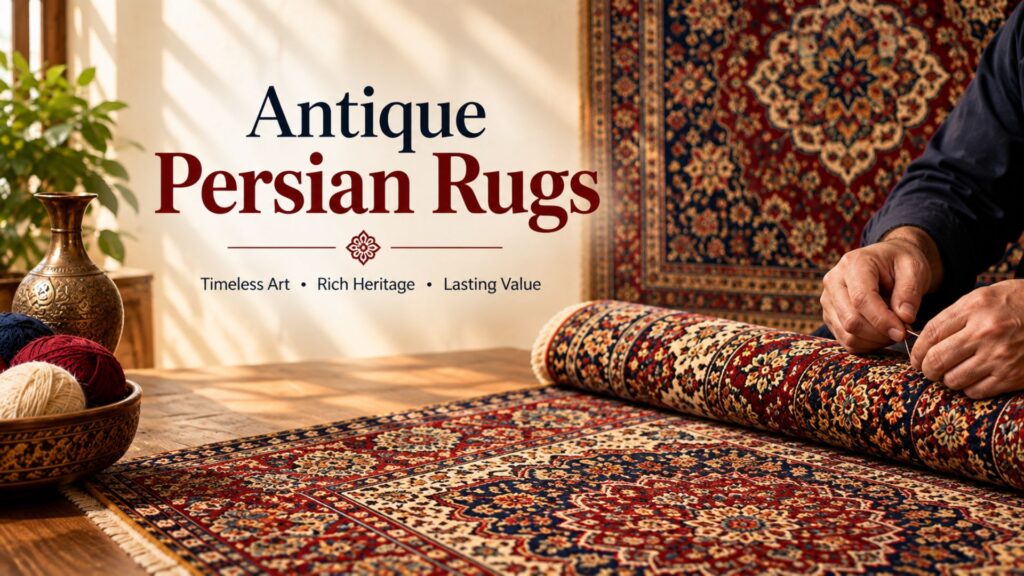
Antique Persian rugs are more than beautiful floor coverings. They are pieces of traditional craftsmanship that can bring history, character, and warmth into a home. Each rug can reflect the skills of the artisans who created it, from the hand-knotting technique and natural materials to the intricate patterns and carefully chosen colors.
For homeowners and collectors in Thailand, choosing an antique Persian rug can be exciting, but it is also important to understand what makes a rug genuinely antique, how to identify its quality, and how to care for it properly.
In this guide, Safa Carpet Gallery explains the key things to know about antique Persian rugs, including their age, craftsmanship, materials, designs, authenticity, value, and care.
Antique Persian rugs are traditionally handmade rugs that have significant age and are valued for their craftsmanship, design, materials, condition, and history. Unlike mass-produced carpets, many antique Persian carpets were created by skilled artisans using traditional hand-knotting techniques.
The appeal of antique Persian rugs comes from their individuality. Small variations in knots, colors, patterns, and texture can show that a rug was made by hand rather than produced by a machine.
For people searching for authentic antique Persian rugs, it is important to look beyond appearance. A beautiful design does not automatically make a rug antique or authentic. Construction, materials, origin, age, and overall condition should all be considered.
Age is one of the most important factors when discussing antique Persian rugs, but age alone does not determine a rug’s quality or value.
An older rug may show natural signs of aging, changes in color, wear patterns, and variations in the pile. These characteristics can be part of the rug’s history and personality.
However, age should always be considered together with craftsmanship, condition, origin, materials, and design.
This is especially important when buying an old Persian rug because a rug that looks old may not necessarily be an authentic antique Persian carpet.
One of the most important characteristics of traditional Persian rugs is their handmade construction. Hand-knotted rugs are created knot by knot, with the artisan building the design gradually.
The process requires patience, skill, and experience. This is one reason handmade Persian carpets can have subtle differences from one rug to another.
If you are interested in understanding how hand-knotting works, our guide on What Are Hand Knotted Persian Rugs? explains the construction and characteristics in more detail.
Antique Persian rugs were traditionally made using materials such as wool and silk. The quality of the material affects the rug’s texture, appearance, durability, and overall character.
Handmade wool rugs can offer a comfortable and durable surface, while silk can provide a finer texture and greater visual detail.
The combination of natural materials and traditional craftsmanship is one of the reasons fine Persian rugs remain popular among collectors and homeowners.
Another characteristic of antique Persian rugs is their detailed design. Floral motifs, medallions, borders, vines, geometric elements, and traditional Persian patterns can create highly distinctive compositions.
Because these rugs were handmade, the design may contain small variations that give the piece an individual character.
The terms antique and vintage are often used together, but they do not mean exactly the same thing.
An antique Persian rug generally refers to a rug that has considerable age, while a vintage Persian rug is usually an older rug that does not necessarily meet the age commonly associated with antiques.
When comparing antique Persian rugs and vintage Persian rugs, buyers should consider:
Rather than choosing a rug simply because it is described as “antique,” ask for information about its construction, origin, age, and condition.
Persian carpet-making developed across different regions, and each area became associated with distinctive styles and weaving traditions.
Tabriz rugs are known for detailed patterns, sophisticated compositions, and fine craftsmanship. They can feature central medallions, floral designs, and intricate borders.
Kashan rugs are often associated with elegant floral patterns, rich colors, and traditional Persian design. Their classic appearance can work particularly well in traditional and sophisticated interiors.
Isfahan rugs are appreciated for detailed craftsmanship and refined Persian designs. Their balanced patterns can make them attractive choices for collectors and luxury interiors.
Qom rugs are particularly known for detailed designs and fine weaving traditions. Silk examples can feature highly intricate patterns and delicate visual details.
The style and origin of a rug can influence its character, so buyers should consider regional craftsmanship when selecting antique Persian carpets.
Identifying an authentic antique Persian rug requires more than simply looking at its color or pattern.
Turn the rug over and examine the knot structure. A hand-knotted rug should show evidence of individual knots and handmade construction.
The back can reveal important information about how the rug was made.
Look closely at the fibers and overall texture. Wool and silk can have very different appearances and feels.
Natural materials and handmade construction can be important indicators when assessing fine Persian rugs.
Traditional Persian rugs are known for sophisticated color combinations. Natural-looking variations and gradual changes in color can add character to an older rug.
However, color alone should never be used to determine authenticity.
The edges and fringes can provide clues about the rug’s construction and condition. Handmade rugs may show variations that are different from machine-made carpets.
An antique rug may naturally show areas of wear. Uneven pile, softened colors, repaired sections, or other signs of age can tell part of the rug’s story.
However, excessive damage can affect usability and value, so condition is just as important as age.
For a more detailed approach to authenticity, read our guide on How to Identify Authentic Persian Rugs.
The value of antique Persian rugs comes from a combination of factors rather than age alone.
Hand-knotting requires considerable time and skill. A complex design with a high level of craftsmanship can take a long time to complete.
High-quality wool, silk, and other traditional materials can contribute to the beauty and longevity of a Persian carpet.
A distinctive design, unusual pattern, regional style, or rare piece can make an antique rug particularly appealing to collectors.
Two rugs of similar age can have very different values because of their condition. Properly maintained rugs with attractive colors, good structure, and limited damage may be more desirable.
An antique rug carries a sense of history that a newly manufactured carpet cannot easily reproduce. Small imperfections and variations can become part of its character.
For a deeper look at craftsmanship and value, you can also read Why Handmade Persian Carpets Are Valuable.
Choosing an antique Persian rug is not only about finding the oldest or most expensive piece. The right rug should also work naturally with your room.
Measure the room before choosing a rug. Consider the placement of furniture, walking areas, doors, and the overall layout.
A well-sized Persian area rug can help connect different pieces of furniture and make a room feel more balanced.
Antique Persian rugs can work with both traditional and contemporary interiors.
A detailed floral rug can create a classic atmosphere, while a more restrained design may complement a modern Thai interior.
Natural and artificial lighting can affect how rug colors appear throughout the day. Before purchasing, look at the rug under different lighting conditions whenever possible.
A rug placed in a high-traffic area may require different considerations from one used mainly as a decorative piece.
Think about how often the room is used, whether children or pets are present, and how much maintenance you are comfortable with.
Persian rugs can add warmth and character to interiors across Thailand. In Bangkok homes, apartments, offices, hotels, and luxury residences, a carefully selected rug can become an important part of the overall interior design.
For Thailand’s warm and humid climate, proper placement and regular care are particularly important.
Avoid unnecessary moisture and prolonged direct sunlight, and make sure the rug has adequate ventilation around it.
Whether you are looking for Persian rugs Thailand buyers can use in contemporary interiors or more traditional luxury Persian rugs, choosing the right material, size, color, and craftsmanship will make a noticeable difference.
Antique Persian rugs need thoughtful care because their age and handmade construction can make them more sensitive to rough treatment.
Regular gentle vacuuming can help remove surface dust and dirt. Avoid aggressive settings that could damage delicate fibers or fringes.
Long-term exposure to strong sunlight can gradually affect colors. Positioning the rug away from intense direct sunlight can help preserve its appearance.
Moisture can create problems for natural fibers. Keep antique rugs away from damp areas and deal with spills as soon as possible.
Deep cleaning an antique Persian carpet should be approached carefully. Incorrect cleaning methods, excessive water, harsh chemicals, or strong brushing can damage older fibers and colors.
If an antique rug needs professional attention, use a specialist familiar with handmade Persian rugs.
Antique Persian rugs have a history that develops naturally over many years. Modern handmade rugs, on the other hand, can provide the beauty of traditional craftsmanship without the age of an antique.
Neither option is automatically better.
The right choice depends on what you want from the rug. If you appreciate history, age, rarity, and traditional character, an antique Persian rug may be the right choice.
If you want handmade craftsmanship with a wider choice of contemporary sizes, colors, and designs, a modern handmade Persian rug may be more suitable.
Understanding the difference between handmade and machine-made construction can also help you make a better decision. See Hand Knotted vs Machine Made Rugs for a useful comparison.
When looking for antique Persian rugs in Bangkok, buyers should look for a carpet gallery that can provide clear information about the rug’s craftsmanship, materials, origin, age, and condition.
A specialist gallery can also help you compare different styles and understand which rug is suitable for your home or collection.
At Safa Carpet Gallery, the focus is on Persian carpets and handmade rugs, giving customers an opportunity to explore traditional craftsmanship and different Persian rug styles.
You can explore the full collection through the Safa Carpet Gallery.
Age is an important factor, but authenticity, craftsmanship, materials, origin, design, and condition should also be considered when evaluating an antique Persian rug.
Many traditional antique Persian rugs are hand-knotted and handmade, although buyers should still examine the rug’s actual construction rather than assuming it is handmade because of its age or appearance.
Yes. An antique Persian rug can add warmth, texture, history, and visual character to a home. The best choice depends on the room, size, design, condition, and intended use.
No. Vintage and antique describe different age categories. A vintage Persian rug is generally older but does not necessarily have the same age associated with an antique rug.
Antique rugs should be cleaned carefully. Avoid harsh chemicals, excessive water, and aggressive brushing. For valuable or delicate rugs, professional Persian rug cleaning is the safer approach.
Antique Persian rugs bring together craftsmanship, traditional design, natural materials, and history. Their beauty is not simply in the pattern on the surface; it is also in the handmade work, regional traditions, and character developed over time.
For buyers in Thailand, taking time to understand authenticity, construction, materials, condition, size, and care can make choosing a Persian rug much easier.
Whether you are searching for authentic antique Persian rugs, fine Persian rugs, handmade Persian carpets, or a distinctive piece for a luxury interior, focus on quality and craftsmanship rather than age or appearance alone.
At Safa Carpet Gallery, the goal is to help customers appreciate Persian rugs as both beautiful interior pieces and examples of traditional craftsmanship.