
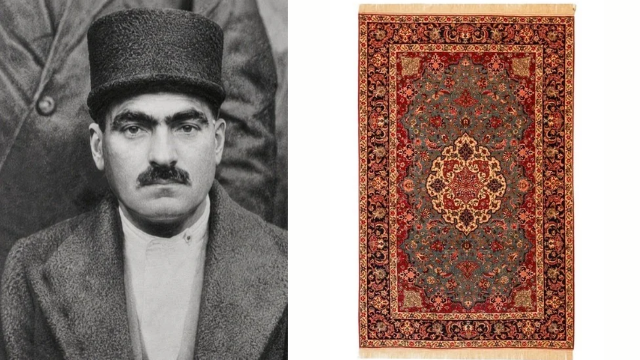
A fine Persian carpet is more than a decorative floor covering. It represents generations of craftsmanship, artistic expression and cultural heritage. Every carefully woven detail contributes to the character of a rug, making it an important part of the interior in which it is displayed.
Among the influential names in the history of Isfahan carpet weaving is Abdolrahim Shureshi, a master craftsman associated with some of the finest Persian carpets produced during the early twentieth century.
His contribution to traditional carpet making helped establish the reputation of Isfahan as an important centre for finely woven Persian rugs. His family’s work also has an interesting connection with other respected names in Persian carpet history, including the Seirafian family.
For collectors, homeowners and interior designers in Thailand, learning about Abdolrahim Shureshi Persian Carpets offers a deeper appreciation of the craftsmanship behind traditional Iranian rugs.
At Safa Carpet Gallery, we believe that choosing a Persian carpet should involve understanding its design, materials, weaving quality and history, not simply selecting a colour that matches the furniture.
Whether you are furnishing a luxury condominium in Bangkok, decorating a villa in Phuket or adding character to a home in Chiang Mai, a fine Persian rug can bring warmth and individuality to your interior.
Abdolrahim Shureshi was an influential Persian carpet weaver based in Isfahan, Iran. He is remembered as one of the early masters who helped develop the city’s reputation for fine carpet production during the modern revival of its weaving industry.
Historical accounts describe him as a skilled craftsman who established his own carpet-weaving workshop after managing an earlier workshop in Isfahan.
His work was recognised for its fine weaving, careful attention to detail and artistic character.
Isfahan has a long association with Persian art and craftsmanship. Its architecture, decorative arts, traditional painting and carpet weaving have influenced the development of Iranian design for generations.
During the early twentieth century, the city experienced renewed activity in fine carpet production.
Abdolrahim Shureshi played an important role in this period. He established a workshop in Isfahan’s historic Naqsh-e Jahan quarter and developed a reputation for producing finely woven carpets.
Unlike some other carpet makers, his work was not consistently signed. As a result, attribution often depends on the characteristics of the weaving, design and documented history of individual carpets.
Shureshi’s importance lies in his approach to craftsmanship.
His workshop became associated with carpets featuring refined weaving and carefully executed designs. His work helped establish a standard of quality that influenced the development of fine Isfahan carpets.
Some historical accounts also describe his association with important artistic circles beyond Iran.
Today, carpets attributed to Abdolrahim Shureshi are of interest to collectors who appreciate the early development of modern Isfahan weaving.
Fine Persian carpets are valued through a combination of technical skill, material quality and artistic design.
The work associated with Abdolrahim Shureshi is particularly interesting because it reflects the relationship between traditional weaving and the visual arts of Isfahan.
Traditional hand-knotted Persian carpets are made by tying individual knots around the foundation threads.
Each row is carefully completed before the next section of the design is added. The process requires considerable experience, concentration and patience.
The fineness of the weaving can influence how clearly small design details appear.
Some historical Shureshi carpets documented by auction specialists have particularly fine knot structures and silk foundations.
When examining a carpet, however, knot density should not be considered in isolation. The quality of the fibres, construction, finishing and overall condition are equally important.
If you would like to understand the technique in greater detail, read our guide to Hand-Knotted Persian Rugs.
Materials are an important part of traditional Persian carpet craftsmanship.
Kork wool is a particularly fine type of wool used in some high-quality Persian carpets. It is appreciated for its soft texture and ability to hold intricate details.
Silk can also be used in the pile or foundation, depending on the construction of the individual rug.
The combination of fine wool, silk and carefully prepared dyes can produce carpets with remarkable detail and colour depth.
When evaluating a Shureshi carpet, buyers should confirm the exact materials used rather than assuming every carpet attributed to the maker has the same construction.
One of the most interesting aspects of the Shureshi story is its connection with Persian artists and designers.
Mirza Agha Emami was an important artist associated with the development of decorative and pictorial carpet designs in Isfahan.
His artistic influence helped connect traditional carpet weaving with the wider visual culture of the city.
A carpet designer and a skilled weaver contribute different but closely connected skills.
The designer develops the composition, patterns and visual arrangement, while the weaver translates the design into a woven textile.
Historical carpet records associate Mirza Agha Emami with designs produced for Shureshi’s workshop.
This relationship demonstrates how Persian carpets can bring together artistic planning and highly specialised technical craftsmanship.
Isfahan carpets are often associated with elaborate floral designs, decorative borders, medallions and carefully balanced compositions.
Some examples also feature pictorial subjects inspired by Persian art and architecture.
The result can be a carpet that functions as both a practical furnishing and an artistic centrepiece.
For collectors, the relationship between a designer, workshop and weaver can add considerable historical interest to an individual carpet.
The Shureshi name continued to be associated with Persian carpet craftsmanship through the next generation.
Abbas Shureshi, the son of Abdolrahim, became known for his weaving knowledge and expertise in traditional dyeing techniques.
His contribution is particularly interesting because colour plays such an important role in the character of a Persian carpet.
Traditional Persian carpet colours were developed using natural dye materials and carefully controlled dyeing processes.
The quality of the dyeing can influence the depth, warmth and visual harmony of a finished carpet.
Abbas Shureshi was recognised for his knowledge of traditional dyeing and worked closely with Haj Agha Reza Seirafian.
This connection is an important part of the wider history of fine Isfahan carpets.
The relationship between Abbas Shureshi and Reza Seirafian illustrates how different craftspeople contributed to the development of fine Persian carpets.
Their work brought together weaving knowledge, colour expertise and design traditions.
For readers interested in another important Isfahan carpet-making family, explore the Seirafian Family Persian Rugs Collection at Safa Carpet Gallery.
When considering a historical or collectible Persian rug, authenticity deserves careful attention.
The name of a respected maker can attract interest, but it should not be treated as sufficient proof of origin.
Begin by examining the reverse side of the carpet.
A traditional hand-knotted rug generally shows the pattern on its back, allowing the structure and individual knots to be inspected.
Look closely at the pile, foundation, edges and fringes.
Check whether the materials are consistent with the carpet’s description and whether the overall construction reflects the quality expected of a fine handmade piece.
One interesting detail about Abdolrahim Shureshi is that many carpets attributed to his hand were reportedly unsigned.
This makes provenance particularly important.
Useful supporting information may include:
A signature should not be accepted as proof without further examination.
For additional guidance, read our Guide to Identifying Authentic Persian Rugs.
Persian carpets can complement many interior styles found across Thailand.
From modern city apartments to spacious holiday villas, the right carpet can introduce texture, colour and a sense of craftsmanship.
Bangkok has a diverse residential landscape, including contemporary condominiums, luxury apartments and traditional family homes.
In areas such as Sukhumvit, Phrom Phong, Thong Lo and Ekkamai, interior design often combines modern furniture with natural materials and neutral colours.
A fine Persian carpet can create a visual connection between these elements.
For example, a traditional rug with warm red, ivory or deep blue tones can complement cream sofas, wooden furniture and marble flooring.
In a smaller Bangkok condominium, choosing the correct rug size is particularly important. A well-proportioned carpet can define the seating area without making the room feel crowded.
In Phuket and Pattaya, many homes and villas feature spacious living rooms, open layouts and large windows.
A Persian carpet can help make these spaces feel more welcoming.
For a bright interior, consider a design with balanced colours that complement the natural light and existing furnishings.
In a formal living room, a detailed traditional carpet can create an elegant focal point beneath the main seating arrangement.
The choice should always consider the room’s layout, flooring, furniture and intended use.
Chiang Mai interiors often incorporate natural wood, handcrafted furniture and warm decorative finishes.
Persian carpets can complement these materials by introducing additional texture and detailed patterns.
A traditional design can work particularly well in a reading room, study or family living space.
For homes throughout Thailand, the most suitable carpet is one that balances its design with the character and practical needs of the room.
Thailand’s tropical climate makes proper carpet care especially important.
Humidity, dust, sunlight and unsuitable cleaning products can affect natural fibres over time.
Avoid placing handmade carpets directly on persistently damp floors.
Good indoor ventilation helps reduce moisture-related problems, particularly during Thailand’s rainy season.
If a rug becomes wet, it should be dried appropriately and checked for trapped moisture.
Fine wool and silk carpets may require specialist attention if exposed to excessive moisture.
Regular gentle vacuuming helps remove dust and everyday dirt.
Avoid harsh chemicals, excessive water and aggressive brushing.
Rotating a carpet occasionally can also help distribute wear and reduce prolonged sunlight exposure in one area.
For antique or valuable Persian rugs, professional cleaning by an experienced specialist is recommended.
You can find more practical advice in our Persian Rug Care Tips.
Choosing a Persian carpet is easier when you can examine the piece closely.
Photographs provide an overview of the design, but seeing a carpet in person allows you to appreciate its texture, colours and weaving details.
At Safa Carpet Gallery, we welcome customers interested in traditional Persian carpets and fine handmade rugs.
Whether you are furnishing a luxury home in Bangkok, decorating a villa in Phuket or searching for a distinctive carpet for a property in Chiang Mai, understanding the craftsmanship behind each piece can help you make a more informed decision.
Explore our Persian Carpet Collection to discover traditional carpet designs and learn more about Persian weaving heritage.
Contact Safa Carpet Gallery for information about current collections, materials, sizes and the provenance of individual carpets.
Abdolrahim Shureshi was an influential Persian carpet weaver associated with Isfahan, Iran. He established a weaving workshop and became known for producing finely crafted Persian carpets during the early twentieth century.
His workshop was based in Isfahan, Iran, a historic centre of Persian art and carpet weaving.
Documented examples include fine wool, silk and silk foundations. The exact materials vary between individual carpets.
Abbas Shureshi, the son of Abdolrahim, was recognised for his carpet-weaving knowledge and expertise in traditional dyeing techniques. He also worked closely with Reza Seirafian.
Yes. Depending on their size, colours and design, fine Isfahan carpets can complement luxury condominiums, private residences and villas in Bangkok and other Thai cities.
Examine its construction, materials, condition and provenance. Since many carpets attributed to Abdolrahim Shureshi were unsigned, reliable documentation and specialist assessment are particularly important.
The story of Abdolrahim Shureshi reflects an important period in the development of fine Isfahan carpet weaving.
His craftsmanship, the artistic influence associated with his workshop and the later contributions of his son Abbas Shureshi all form part of the wider heritage of Persian carpet making.
For collectors and homeowners in Thailand, these carpets offer an opportunity to appreciate more than decorative beauty. They represent the relationship between traditional weaving, artistic design and generations of skilled craftsmanship.
At Safa Carpet Gallery, we believe that a fine Persian carpet should bring lasting character to the space it occupies.
Whether you are looking for Persian rugs in Bangkok, handmade carpets for a Phuket villa or an elegant rug for your Chiang Mai home, understanding the maker and the craftsmanship behind each piece is an excellent place to begin.