
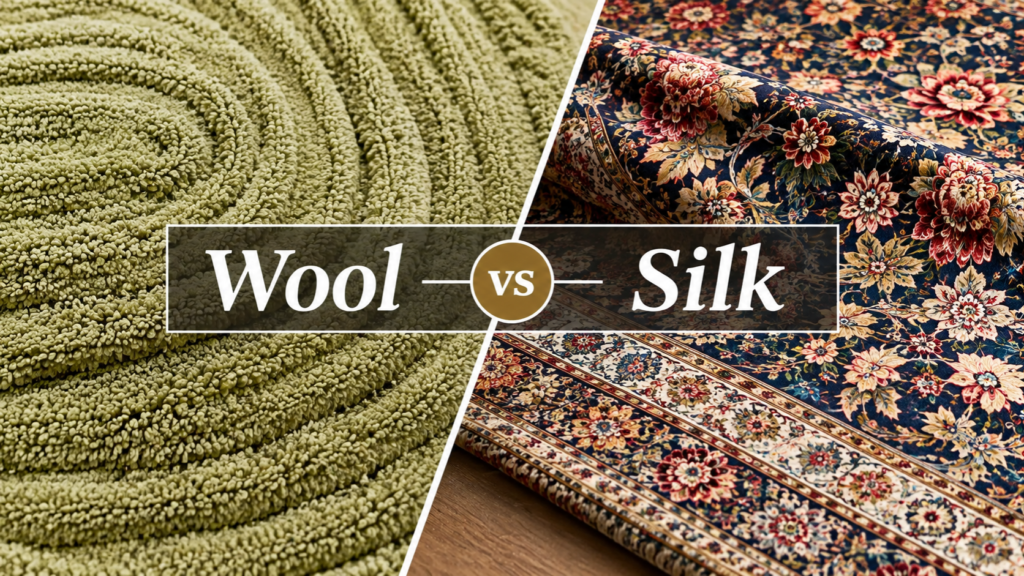
Persian rugs are admired around the world for their intricate designs, traditional craftsmanship, rich colours, and exceptional attention to detail. However, when choosing a Persian rug for your home, one of the most important decisions is selecting the right material. Silk and wool are two of the most recognised natural fibres used in traditional Persian carpet weaving, and each offers different characteristics.
Silk vs wool Persian rugs is an important comparison for anyone considering a handmade carpet. Silk rugs are appreciated for their fine texture, natural sheen, and ability to display intricate patterns, while wool rugs are valued for their softness, resilience, and suitability for a variety of living spaces.
Both materials have a long history in Persian carpet craftsmanship. The right choice depends on your lifestyle, interior design, preferred appearance, maintenance expectations, and budget.
For homeowners in Bangkok and other parts of Thailand, understanding these differences can also help when selecting a carpet for a living room, bedroom, or decorative interior space.
In this guide, we explore the characteristics, advantages, differences, and practical considerations of silk and wool Persian rugs to help you choose the right carpet for your home.
Before comparing the two materials, it is useful to understand how silk and wool are used in traditional Persian carpet weaving.
A silk Persian rug is a handmade carpet woven using natural silk fibres. Silk is known for its fine structure, smooth surface, and natural lustre.
One of the most distinctive characteristics of silk is the way it reflects light. Depending on the direction of the pile and the surrounding lighting, a silk carpet can appear to have different shades and tones.
This quality makes silk particularly suitable for displaying detailed floral patterns, intricate borders, and elaborate traditional designs.
Fine silk Persian carpets often feature delicate workmanship and detailed motifs. They are appreciated by collectors and homeowners who value refined craftsmanship and luxurious interior decoration.
A wool Persian rug is traditionally woven using natural wool fibres, commonly obtained from sheep.
Wool has a different texture and appearance from silk. It generally offers a softer, fuller surface with a natural appearance and less pronounced shine.
Wool is valued for its resilience and versatility. Its structure makes it suitable for many types of handmade carpets, including traditional Persian designs with elaborate central medallions, floral patterns, and geometric motifs.
Depending on the quality of the wool, weaving technique, and carpet construction, wool Persian rugs can offer a combination of comfort, durability, and attractive design.
Persian carpet weaving traditions include different materials, weaving techniques, and regional designs.
Some carpets are made primarily from wool, while others use silk throughout their construction. Certain handmade Persian rugs combine both materials.
Silk may also be used to highlight particular design elements, creating contrast and adding definition to selected patterns.
The choice of material is only one part of a carpet’s quality. Knotting technique, fibre preparation, weaving consistency, finishing, and the skill of the weaver also contribute to the finished rug.
Although both materials are used in handmade Persian carpets, their characteristics are different.
| Feature | Silk Persian Rugs | Wool Persian Rugs |
|---|---|---|
| Texture | Fine and smooth | Soft and textured |
| Appearance | Natural sheen | Generally more subdued |
| Design details | Excellent for intricate details | Suitable for many traditional designs |
| Durability | Depends on construction and usage | Generally resilient |
| Maintenance | Requires careful handling | Generally easier to maintain |
| Price | Often higher for fine-quality examples | Available across a wide price range |
| Typical use | Decorative and carefully placed interiors | Living spaces and decorative interiors |
Let’s examine these differences more closely.
Silk fibres are fine and smooth, giving silk Persian rugs a refined surface. Their texture can feel particularly delicate compared with many wool carpets.
Wool rugs generally have a fuller texture. Depending on the wool quality and pile construction, they can provide a comfortable surface underfoot.
For homeowners who prefer a softer, more substantial carpet texture, wool may be an attractive option. Those who appreciate a finer and smoother surface may prefer silk.
One of the most noticeable differences between silk and wool is their appearance.
Silk naturally reflects light, producing a subtle sheen that can make intricate designs appear especially detailed. This characteristic is one reason silk Persian carpets are appreciated in elegant interiors.
Wool usually has a more understated appearance. Its natural texture gives colours and patterns a rich, warm character.
Both materials can display beautiful traditional Persian patterns, but the visual effect is different.
The durability of a Persian rug depends on several factors, including fibre quality, knotting, construction, pile height, workmanship, and how frequently it is used.
Wool is generally known for its resilience and ability to recover from everyday compression. This makes many wool Persian rugs suitable for regular household use.
Silk is a fine fibre that requires more careful handling, particularly in areas exposed to heavy foot traffic.
However, it would be incorrect to assume that every wool rug is more durable than every silk rug. The quality of construction and the intended use of the carpet matter considerably.
Silk and wool carpets require appropriate care.
Wool rugs are generally more forgiving of regular household use, although they still require routine maintenance and suitable cleaning.
Silk carpets require greater care because their fine fibres can be more sensitive to unsuitable cleaning products, excessive moisture, and rough handling.
For both materials, avoid aggressive scrubbing and harsh chemicals. Professional assessment is recommended when dealing with stains, valuable handmade carpets, or delicate antique rugs.
Silk Persian rugs are often more expensive than comparable wool carpets, particularly when they feature fine materials, intricate designs, and exceptional workmanship.
However, material alone does not determine the price of a Persian rug.
Other important considerations include:
A finely woven wool Persian rug can also be highly valuable. Similarly, a silk carpet’s value depends on more than simply being made from silk.
Silk Persian carpets are appreciated for their refined appearance and detailed craftsmanship.
Silk’s fine fibres allow weavers to create highly detailed patterns.
Traditional floral arrangements, delicate borders, small decorative motifs, and complex compositions can be displayed with remarkable definition.
This makes silk particularly appealing to people who appreciate detailed Persian carpet designs.
The natural sheen of silk gives these carpets a distinctive appearance.
Their surface responds to light, creating subtle changes in colour and visual depth. This characteristic can complement elegant interiors, formal living rooms, and carefully designed decorative spaces.
Many silk Persian rugs involve detailed weaving and careful finishing.
The quality of a carpet depends on the skill of its maker, the materials selected, and the consistency of its construction.
For buyers who appreciate traditional weaving and intricate workmanship, a fine silk Persian rug can be an impressive addition to an interior.
Wool Persian carpets remain popular because of their versatility, natural texture, and practical characteristics.
Wool fibres have a naturally resilient structure.
Many wool carpets can recover well from normal compression caused by household use, although performance varies according to fibre quality and construction.
This makes wool an attractive material for rugs placed in regularly used living spaces.
Wool Persian rugs generally offer a fuller and more textured surface than silk rugs.
Their natural feel can contribute warmth and comfort to a room.
They are available in many traditional designs, colour combinations, and sizes, making them suitable for different interior styles.
Wool carpets can complement both traditional and contemporary interiors.
Traditional Persian medallion patterns, floral designs, geometric motifs, and village-inspired patterns are all represented in wool carpet weaving traditions.
Their variety makes it easier for homeowners to find a carpet that complements their existing furniture and decoration.
Choosing a Persian rug in Thailand involves considering more than appearance and material.
The country’s tropical climate, local living conditions, room ventilation, and carpet placement should also influence the decision.
Bangkok homes feature a variety of interior styles, from contemporary condominiums and modern residences to traditional houses and luxury villas.
A silk Persian rug can be an attractive option for a carefully arranged living room, formal sitting area, or decorative space where its detailed patterns can be appreciated.
A wool Persian rug may be a practical choice for a family living area or a space where regular household activity takes place.
The best option depends on how the room is used and the type of atmosphere you want to create.
Thailand’s tropical climate makes ventilation and moisture management important considerations for carpet owners.
Both silk and wool carpets should be kept in appropriately dry, well-ventilated environments.
Excessive moisture can create problems for natural fibres and may encourage mould or mildew if a carpet remains damp.
Some useful precautions include:
Air conditioning can help manage indoor humidity, but proper ventilation and moisture control remain important.
The intended location should influence your material selection.
| Room | Suggested consideration |
|---|---|
| Formal living room | Silk or wool, depending on design and usage |
| Family living room | A resilient wool carpet may be practical |
| Bedroom | Either material, depending on comfort and placement |
| Decorative sitting area | Fine silk or detailed wool designs |
| Low-traffic interior space | Silk can be considered |
| Frequently used entrance | Consider a suitable construction designed for regular use |
Remember that the best rug is not necessarily the most expensive one. It is the carpet that suits your home, lifestyle, and expectations.
Not every Persian rug is made entirely from one material.
Some handmade carpets combine silk and wool to benefit from the characteristics of both fibres.
For example, a carpet may use wool for the main pile while incorporating silk into selected design details. This can create visual contrast and highlight particular motifs.
Other constructions may use different combinations of materials throughout the carpet.
Silk-wool combinations can offer an interesting balance between texture, appearance, and design.
When considering a blended Persian rug, ask the seller about:
Understanding the material composition is important when purchasing an authentic handmade Persian carpet.
The right choice depends on your personal preferences and the conditions in which the carpet will be used.
If you have a busy household with frequent movement, a well-made wool Persian rug may be a practical choice.
If you want a carpet for a decorative or carefully maintained interior, a silk Persian rug may be more suitable.
Set a realistic budget before selecting a carpet.
Compare the quality of materials, construction, design, dimensions, and overall condition rather than judging a carpet solely by its fibre.
A well-crafted wool carpet may offer excellent quality, while a fine silk carpet may appeal to buyers seeking a more refined decorative piece.
Think about how frequently the carpet will be used.
A carpet in a formal sitting room may experience less foot traffic than one placed in a busy family living area.
Material selection should reflect the actual conditions of the room.
Before purchasing, examine the carpet carefully.
Pay attention to its construction, materials, pattern consistency, finishing, and overall workmanship.
For additional guidance, read our article on How to Identify Authentic Persian Rugs.
Understanding the characteristics of genuine handmade carpets can help you make a more informed purchasing decision.
When purchasing a handmade Persian rug, the material is important, but it should never be the only consideration.
Two carpets made from wool may have very different characteristics because of variations in fibre quality, preparation, weaving, and finishing.
The same applies to silk carpets.
A well-made Persian rug reflects the combined work of material selection, traditional weaving knowledge, design, and craftsmanship.
Buyers should also consider the rug’s dimensions, intended placement, maintenance requirements, and overall condition.
If you are comparing different carpets, our Persian Rug Buying Guide can help you understand additional factors involved in selecting a suitable handmade carpet.
For information about pricing, you can also explore our Persian Rug Price Guide.
Choosing between silk and wool Persian rugs is ultimately about finding the right combination of craftsmanship, appearance, material, and practicality.
Some homeowners prefer the refined surface and intricate details of silk carpets. Others appreciate the natural texture and versatility of wool Persian rugs.
Both materials represent important traditions in Persian carpet weaving.
At Safa Carpet Gallery, customers can explore Persian carpets and handmade pieces representing different designs, materials, and craftsmanship traditions.
Located in Bangkok, Safa Carpet Gallery welcomes customers interested in discovering Persian rugs and learning more about their materials, origins, and traditional weaving techniques.
Whether you are considering a silk Persian carpet for an elegant interior or a wool Persian rug for a comfortable living space, understanding the differences can help you select a carpet that complements your home.
Explore the Safa Carpet Gallery homepage to learn more about our Persian carpet collection.
Neither material is universally better. Silk Persian rugs are appreciated for their fine texture, natural sheen, and intricate details. Wool Persian rugs are valued for their resilience, comfort, and versatility. The right choice depends on the intended use, budget, and personal preference.
Wool is generally more resilient for regular household use. Silk is a finer fibre and typically requires more careful handling. However, the durability of both materials depends on their quality, construction, weaving, and usage.
Yes. Silk Persian rugs can be suitable for formal or decorative living rooms, particularly where foot traffic is moderate and the carpet receives appropriate care. For busy family areas, a suitable wool carpet may be more practical.
Wool Persian rugs can be used in Thailand, provided they are maintained appropriately. Good ventilation, moisture control, regular inspection, and proper cleaning are important in humid environments.
Fine silk Persian rugs often command higher prices than comparable wool carpets. However, price depends on many factors, including craftsmanship, materials, design, size, condition, and rarity.
Both materials require appropriate cleaning methods. Avoid harsh chemicals, excessive moisture, and aggressive scrubbing. Silk carpets generally require particularly careful handling. Professional carpet cleaners experienced with handmade Persian rugs are recommended for valuable carpets and difficult stains.
For more information, see our Persian Rug Care Tips.
Yes. Some handmade Persian rugs combine silk and wool. Silk may be used for decorative details, while wool forms the main pile. The precise construction varies between carpets.
Silk and wool Persian rugs each offer distinctive characteristics that make them appealing to different homeowners.
Silk carpets stand out for their fine texture, natural sheen, and ability to display intricate designs. Wool carpets offer a fuller texture, natural resilience, and versatility for different living spaces.
For buyers in Bangkok and throughout Thailand, the decision should also consider room placement, ventilation, maintenance, and everyday use.
Rather than choosing a carpet based only on its material, consider its craftsmanship, construction, design, quality, and suitability for your home.
A carefully selected Persian rug can become an important part of your interior, bringing together traditional artistry, natural materials, and timeless design.