
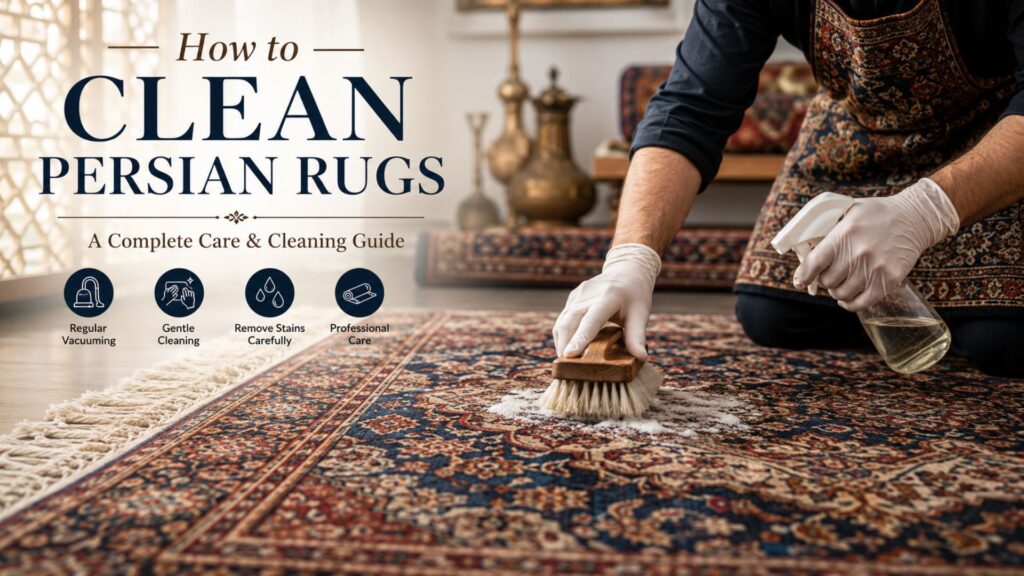
Persian rugs are valued for their craftsmanship, detailed patterns, natural materials, and long-lasting character. Whether a rug is hand-knotted, handmade, wool, or silk, proper cleaning is important for maintaining its appearance and protecting the fibers over time.
However, Persian rugs should not be cleaned in the same way as ordinary machine-made carpets. Aggressive scrubbing, excessive moisture, strong chemicals, or incorrect drying methods can damage delicate fibers, colors, and the rug’s structure.
This guide explains how to clean Persian rugs safely, how often they should be cleaned, which cleaning methods to avoid, and when professional Persian rug cleaning may be the better choice.
The best way to clean a Persian rug depends on its material, construction, age, dye quality, and overall condition.
For routine maintenance, gentle vacuuming and immediate treatment of small spills are usually appropriate. For deep cleaning, valuable hand-knotted Persian rugs and antique rugs require greater care because excessive water, heat, or chemical cleaning products can cause permanent damage.
A simple Persian rug cleaning routine should include:
Understanding the construction of the rug is the first step toward choosing the right cleaning method.
Light maintenance can often be performed at home when the rug has no serious stains, dye bleeding, structural damage, or delicate antique characteristics.
Begin by removing loose dirt from the surface of the rug.
Use a vacuum cleaner with an appropriate setting and avoid aggressive brushing. If the rug has delicate fringes, do not repeatedly run the vacuum directly over them because this can cause pulling or tangling.
Regular dust removal is important because small particles can work their way into the rug fibers.
Vacuum both sides when appropriate and safe for the rug.
For delicate Persian rugs, use a gentle vacuuming method rather than repeatedly applying strong suction. Pay particular attention to areas with frequent foot traffic.
Regular vacuuming helps prevent dirt from becoming deeply embedded in the fibers.
When something spills on a Persian rug, act quickly.
First, gently blot the liquid with a clean, absorbent cloth. Do not rub the affected area aggressively because rubbing can push the liquid deeper into the fibers and may spread the stain.
Work from the outside of the affected area toward the center to reduce the possibility of spreading the spill.
Persian rugs should not be saturated unnecessarily.
Excess moisture can create problems for natural fibers and may contribute to color bleeding, odor, shrinkage, or damage to the rug’s foundation.
When treating a small area, use controlled moisture rather than soaking the entire rug.
After treating a small spill, allow the area to dry completely.
Good airflow can help the rug dry naturally. Avoid placing a damp rug in a tightly enclosed or poorly ventilated area.
Never leave a Persian rug wet for an extended period.
Different stains require different approaches. The most important rule is to avoid aggressive treatment before understanding the material and dyes of the rug.
Blot the spill as soon as possible using a clean cloth.
Avoid rubbing because it may spread the liquid and disturb the rug fibers.
Allow wet mud to dry before attempting to remove it. Once dry, gently remove the loose material and then vacuum the area.
Trying to scrub wet mud into the rug can make the problem worse.
Oil-based stains can be difficult to remove from natural fibers. Avoid experimenting with strong household chemicals because they may affect the rug’s fibers or colors.
For an expensive or delicate Persian rug, professional cleaning is generally safer.
Pet-related stains should be addressed quickly because moisture and odor can penetrate deeper into the rug.
If the stain has reached the foundation or backing, surface cleaning may not be sufficient.
Water can be used in some Persian rug cleaning processes, but that does not mean every Persian rug should simply be soaked and washed at home.
The amount of water, cleaning method, drying process, and type of dye all matter.
Hand-knotted Persian rugs can contain natural wool or silk fibers and may use dyes that require careful handling. Excessive moisture or incorrect washing can cause colors to bleed or the rug to lose its original shape.
Before deep washing a Persian rug, consider:
If you are unsure about the rug’s construction or value, professional assessment is preferable to experimenting with a home cleaning method.
There is no single cleaning schedule that works for every Persian rug.
Cleaning frequency depends on foot traffic, location, household conditions, pets, children, and how well the rug is maintained.
A practical maintenance routine can include:
Regularly: Gentle vacuuming and inspection.
Immediately: Treat spills and accidents.
Periodically: Check the rug for embedded dirt, stains, odors, or changes in color.
When necessary: Arrange professional cleaning for deeper dirt or difficult stains.
A Persian rug in a low-traffic room may require less frequent deep cleaning than a rug placed in a busy entrance or living area.
Hand-knotted Persian rugs require special attention because each rug is individually constructed using knots rather than being produced through a standard machine-made process.
Their value can depend on factors such as craftsmanship, materials, knot density, design, age, and condition.
When cleaning a hand-knotted Persian rug:
If you want to understand how hand-knotted Persian rugs are constructed, see our guide on What Are Hand Knotted Persian Rugs?.
Wool is commonly used in Persian rugs because it is naturally durable and has a resilient structure.
However, wool still requires careful cleaning.
Avoid excessive heat, strong chemicals, and rough scrubbing. Wool fibers can react differently to moisture and cleaning products than synthetic carpet fibers.
Gentle maintenance and appropriate professional cleaning can help preserve the texture and appearance of a wool Persian rug.
Silk Persian rugs require even more careful handling.
Silk fibers are delicate, and aggressive cleaning methods may damage their appearance and texture.
For valuable silk Persian rugs, avoid experimenting with household cleaning products or intensive DIY washing.
Professional assessment is recommended before attempting deep cleaning.
Some cleaning mistakes can cause more damage than the original stain.
Scrubbing can disturb delicate fibers and may spread a stain.
Bleach, aggressive detergents, and unsuitable carpet chemicals can alter colors or damage natural fibers.
Too much moisture can create problems with dyes, fibers, backing, and drying.
High heat can affect natural fibers and may contribute to changes in shape or texture.
A damp rug should be dried properly and promptly.
Antique Persian rugs can have fragile fibers, aged dyes, previous repairs, and structural weaknesses. A cleaning method that works on a modern rug may not be suitable for an antique piece.
For valuable Persian rugs, antique rugs, silk rugs, or rugs with deep stains and structural concerns, professional care can be a safer option. Safa Carpet Gallery offers repair and cleaning services for Persian rugs, helping owners address cleaning and maintenance needs with greater care.
Professional Persian rug cleaning becomes especially important when a rug has:
Professional cleaning can also be useful when you are uncertain about the correct cleaning method.
The goal should not simply be to make the rug look clean. Proper cleaning should also protect its fibers, colors, construction, and long-term condition.
Persian rugs should be clean and completely dry before long-term storage.
Dirt and moisture left inside the fibers can create problems while the rug is stored.
Before storing a Persian rug:
Avoid storing a Persian rug in a damp basement or another environment with uncontrolled moisture.
Good maintenance can reduce the need for intensive cleaning.
Rotating the rug periodically can help distribute foot traffic more evenly.
Avoid placing valuable rugs in areas where they are constantly exposed to heavy traffic, moisture, or dirt.
Strong sunlight can gradually affect some rug dyes. Positioning the rug carefully can help reduce uneven fading.
The faster a spill is addressed, the less opportunity it has to penetrate deeply into the fibers.
Look for loose edges, damaged fringes, stains, fading, or changes in texture.
Early attention can prevent small problems from becoming larger restoration issues.
Persian rugs should not automatically be treated like ordinary wall-to-wall carpets.
Traditional Persian rugs may contain natural wool, silk, cotton foundations, handmade knots, and complex dyes. Their construction requires a more careful approach.
Machine-made carpets are often designed for standardized cleaning processes, while individual Persian rugs can vary considerably in materials, construction, age, and condition.
This is why understanding the rug before selecting a cleaning method is important.
If you are comparing handmade and machine-made rugs, read our guide on Hand Knotted vs Machine Made Rugs.
Light maintenance such as gentle vacuuming and careful treatment of small spills may be possible at home. Deep cleaning is more complicated, especially for valuable, antique, silk, or fragile Persian rugs.
It is better not to assume that a standard carpet cleaner is suitable for a Persian rug. Cleaning products can react differently with natural fibers and dyes.
Blot the affected area quickly and avoid aggressive rubbing. For difficult stains, valuable rugs, or uncertain materials, professional cleaning is safer.
Some Persian rugs can be professionally washed, but the correct process depends on the rug’s fibers, dyes, construction, age, and condition.
The ideal frequency depends on traffic, environment, material, and condition. Regular inspection can help determine when deeper cleaning is necessary.
Silk Persian rugs require particularly careful handling because silk fibers are delicate. Professional cleaning is generally preferable for valuable silk rugs.
If your Persian rug needs professional cleaning, repair, or maintenance, Safa Carpet Gallery can help you choose the appropriate care for your rug.
Proper Persian rug cleaning is about more than removing visible dirt. The cleaning method should protect the rug’s fibers, colors, construction, and overall condition.
For everyday maintenance, gentle vacuuming, quick spill treatment, controlled moisture, and proper storage can make a significant difference. When a rug has deep stains, delicate fibers, antique characteristics, or structural problems, professional cleaning is a safer option.
A well-maintained Persian rug can continue to add character, craftsmanship, and beauty to an interior for many years.
For more information about identifying genuine Persian rugs, read our detailed guide on How to Identify Authentic Persian Rugs.