
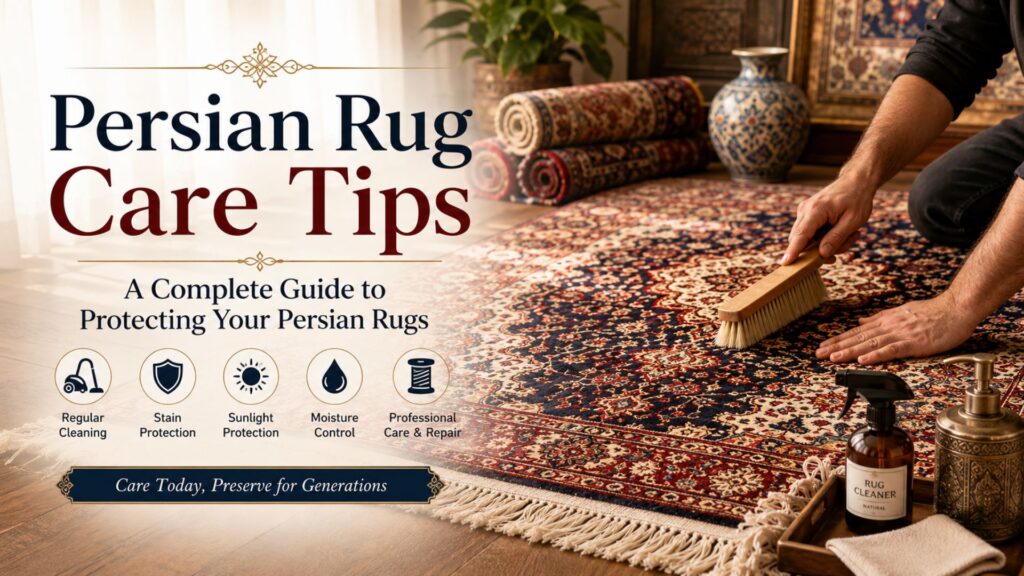
Persian rugs are more than floor coverings. They are valued for their detailed designs, craftsmanship, materials, and the time involved in creating each piece. Whether you own a hand knotted Persian rug, handmade carpet, wool rug, silk rug, or an antique Persian carpet, proper care can help maintain its appearance and condition for years.
Persian rug care does not have to be complicated. Regular maintenance, careful handling, quick attention to spills, and suitable cleaning methods can help protect the rug from unnecessary wear and damage. The right approach also depends on the rug’s material, construction, age, and condition.
This guide explains practical Persian rug care tips and the common mistakes to avoid when looking after a valuable rug.
Persian rugs can contain natural fibers, detailed patterns, hand-knotted structures, and carefully produced colors. Everyday foot traffic, dust, sunlight, moisture, and accidental spills can gradually affect their appearance.
Regular care helps reduce the buildup of dirt and allows small problems to be noticed before they become more serious.
Good Persian rug care includes:
The goal is not simply to keep a rug looking clean. Proper maintenance should also help protect its fibers, colors, construction, and overall condition.
The ideal care routine depends on where the rug is placed and how frequently it is used.
A Persian rug in a quiet room may require less frequent maintenance than one placed in a busy living room, hallway, entrance, or other high-traffic area.
A simple routine can include regular vacuuming, checking for spills, inspecting the edges and fringes, and looking for signs of wear.
If you notice changes in the rug’s texture, color, shape, or structure, it is worth addressing the issue rather than allowing the damage to develop further.
Vacuuming is one of the simplest ways to remove everyday dust and dirt from a Persian rug. However, the method matters.
Use a gentle setting that is appropriate for the rug and avoid aggressive cleaning movements. Repeatedly using excessive suction can place unnecessary stress on delicate fibers.
Use a suitable vacuum setting for the rug’s construction and material.
For delicate rugs, avoid unnecessarily powerful suction and aggressive rotating brushes. If you are unsure which setting is appropriate, it is safer to use a gentle approach.
The fringes are part of the rug’s structure and appearance. Avoid repeatedly pulling them into the vacuum or allowing them to become tangled.
Clean around the fringes carefully rather than treating them like an ordinary carpet surface.
The frequency depends on foot traffic and the amount of dust entering the room.
High-traffic rugs generally require more frequent surface cleaning, while rugs in low-traffic areas may need less frequent attention.
The important point is consistency. Regular gentle maintenance is generally preferable to allowing dirt to accumulate for a long period.
Accidental spills are one of the most common risks to a rug.
The best response is to act quickly. When a liquid is left on the rug, it can move deeper into the fibers and potentially affect the surrounding area.
Immediately blot the affected area with a clean, absorbent cloth.
Do not press aggressively or spread the spill across a larger section of the rug. Work carefully and give the affected area appropriate time to dry.
Rubbing can push the substance deeper into the fibers and may spread the stain.
It can also place unnecessary stress on the surface of the rug. Gentle blotting is generally a better first response than aggressive scrubbing.
Some stains are difficult to remove safely, especially when the rug is valuable, antique, silk, or otherwise delicate.
If a stain does not respond to careful basic treatment, avoid repeatedly experimenting with household cleaning products. Professional assessment can help determine the appropriate cleaning approach.
Natural light can make an interior feel brighter, but prolonged exposure to strong sunlight may affect some rug colors over time.
Consider the position of the rug in relation to windows and strong direct sunlight.
A rug exposed to strong sunlight in one particular area may experience uneven changes in color.
Positioning the rug carefully and managing direct sunlight can help reduce this risk.
When placing a valuable Persian rug, consider both foot traffic and exposure to sunlight.
A suitable location can help reduce unnecessary wear while allowing the rug’s design to remain an important part of the room.
Different materials require different levels of care. Understanding what your rug is made from is therefore an important part of Persian rug care.
Wool is valued for its durability and natural characteristics. Nevertheless, wool rugs should still be treated carefully.
Avoid harsh chemicals, excessive moisture, and aggressive scrubbing. Regular gentle maintenance can help preserve the rug’s texture and appearance.
Silk is more delicate than many other rug materials and requires careful handling.
Avoid treating a valuable silk Persian rug like an ordinary household carpet. Strong cleaning products, excessive moisture, and rough handling can create unnecessary risks.
For valuable silk rugs, professional care is often the safer choice.
Handmade Persian rugs can differ considerably in materials, construction, age, and condition.
Before choosing a cleaning or maintenance method, consider the specific characteristics of the rug rather than applying the same process to every handmade rug.
Hand-knotted Persian rugs are created through individual knotting rather than standard machine production. Their construction and craftsmanship make appropriate care especially important.
Gentle vacuuming, quick spill treatment, careful placement, and professional attention when required can help maintain their condition.
If you want to learn more about how these rugs are made, see our guide to What Are Hand Knotted Persian Rugs?.
Moisture can create problems for rugs, particularly when it remains trapped for an extended period.
Avoid leaving a Persian rug damp after cleaning or a spill. Good airflow and appropriate drying are important whenever moisture is introduced.
The storage environment is also important. A clean, dry environment is preferable to an area where humidity or moisture is difficult to control.
Regular foot traffic can cause certain areas of a rug to receive more wear than others.
Rotating the rug from time to time can help distribute traffic more evenly.
Before rotating it, check the surrounding furniture and flooring to ensure the rug can be moved without catching or damaging the edges.
Proper storage is important when a Persian rug will not be used for an extended period.
Before storage, make sure the rug is clean and completely dry. Inspect it for stains, moisture, loose areas, or other visible problems.
Dirt and moisture should not be left inside the rug during long-term storage.
A rug should be completely dry before being placed into storage.
Rolling is generally preferable to folding when storing a rug for an extended period.
Folding can create persistent creases and put unnecessary stress on the rug.
Store the rug in a clean, dry environment away from excessive moisture.
Avoid unsuitable areas where humidity, water exposure, or other environmental conditions could affect the rug.
Knowing what not to do is just as important as knowing what to do.
Do not automatically use household cleaning chemicals on a Persian rug.
A product that works on another type of carpet may not be appropriate for natural fibers or delicate dyes.
Strong scrubbing can disturb fibers and spread stains.
Gentle treatment is preferable, particularly when dealing with handmade and hand-knotted rugs.
Excessive moisture can create additional problems.
Avoid soaking a Persian rug unless the cleaning method is specifically appropriate for that particular rug.
Small problems can become more difficult to address when they are ignored.
Pay attention to loose edges, damaged fringes, worn areas, stains, and other changes in the rug’s condition.
Some situations are better handled by experienced professionals.
Professional care may be appropriate when a rug has deep stains, significant dirt buildup, persistent odors, delicate fibers, antique characteristics, structural damage, or previous repairs.
Deep cleaning requires consideration of the rug’s material, construction, dyes, age, and condition.
A professional cleaning service can assess these factors before selecting an appropriate approach.
For more serious cleaning requirements, you can learn about the cleaning service offered by Safa Carpet Gallery.
Repair may be necessary when a rug has damaged edges, worn areas, loose sections, or other structural problems.
Addressing damage at an earlier stage can help prevent the affected area from becoming more extensive.
Some Persian rugs and textile pieces are displayed as works of art rather than used primarily as floor coverings.
Framing can provide another way to display and protect suitable pieces, while restoration may be considered when an older or valuable rug requires specialized attention.
Safa Carpet Gallery has a long history with Persian carpets and offers services related to the care and maintenance of fine rugs.
Its services include rug cleaning, rug repair, framing, and hand weaving. These services are particularly relevant when a rug requires more than routine household maintenance.
For collectors and owners of handmade, hand-knotted, antique, wool, or silk rugs, choosing an appropriate care method is an important part of preserving the rug’s condition.
Regular gentle vacuuming, quick treatment of spills, protection from excessive sunlight and moisture, proper positioning, and suitable storage are important parts of Persian rug care.
There is no universal schedule. Cleaning frequency depends on foot traffic, the rug’s material, its location, and its overall condition.
Yes, Persian rugs can generally be vacuumed carefully. Use an appropriate gentle setting and take particular care around delicate areas and fringes.
Limit prolonged exposure to strong direct sunlight and consider the rug’s position in relation to windows.
Make sure the rug is clean and completely dry, roll it rather than fold it, and store it in a clean and dry environment.
Basic maintenance and careful treatment of small spills may be possible at home. Deep cleaning is more complicated, especially for valuable, antique, silk, or delicate rugs.
Good Persian rug care is a combination of regular maintenance, careful handling, and knowing when professional assistance is appropriate.
Gentle vacuuming can help control everyday dirt, while quick attention to spills can reduce the chance of deeper staining. Protecting the rug from excessive sunlight and moisture, rotating it when appropriate, and storing it correctly can also help maintain its condition.
Most importantly, every Persian rug is different. Its material, construction, age, craftsmanship, and condition should be considered before choosing a cleaning or maintenance method.
With thoughtful care and appropriate professional attention when needed, a Persian rug can remain a beautiful and valuable part of an interior for many years.
Safa Carpet Gallery provides rug cleaning, repair, framing, and hand-weaving services for those who require professional care for their fine rugs.