
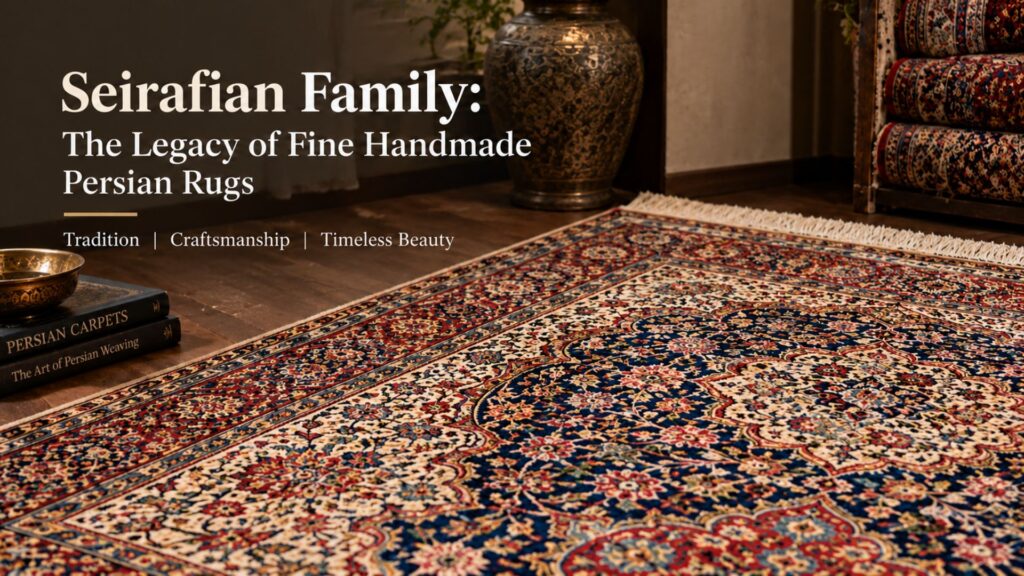
Persian rugs are admired around the world for their intricate patterns, exceptional craftsmanship, and cultural heritage. Among the distinguished names associated with fine Persian carpet weaving, the Seirafian Family of Isfahan, Iran, holds a special place. Their carpets are known for detailed designs, refined weaving, and a strong connection to traditional Persian artistry.
For homeowners, interior designers, and collectors in Thailand, Seirafian Persian rugs offer an opportunity to explore the beauty of traditional Iranian craftsmanship. Whether decorating a Bangkok condominium, an elegant private residence, or a luxury hospitality space, a finely crafted Persian carpet can become a defining feature of an interior.
At Safa Carpet Gallery, we appreciate the artistic traditions behind authentic Persian rugs and the craftsmanship that makes exceptional carpets distinctive.
The Seirafian Family is associated with the production of fine Persian carpets in Isfahan, one of Iran’s renowned carpet-weaving centres. The family became recognised for its commitment to detailed designs, carefully selected materials, and skilled hand weaving.
Haj Agha Reza Seirafian established the family’s carpet-making tradition. His passion for genuine carpets led him to work with talented designers and weavers to create pieces that reflected a high standard of craftsmanship. His son, Mohammad Sadegh Seirafian, continued this tradition while bringing his own ideas and artistic direction to the family workshop.
Over time, the Seirafian name became associated with finely woven Isfahan carpets admired by enthusiasts and collectors. The family tradition demonstrates how knowledge, design skills, and attention to detail can be passed from one generation to the next.
The story of the Seirafian Family is therefore not simply about producing carpets. It is also about preserving an artistic heritage through handmade work.
One of the defining characteristics of fine Seirafian carpets is their detailed construction. Hand-knotted rugs are created by tying individual knots around the foundation of the carpet. Depending on the design, size, and knot density, this process can require considerable time and skill.
The precision of the weaving helps artisans create intricate floral patterns, carefully balanced compositions, and delicate decorative details.
For buyers in Thailand who appreciate handmade Persian rugs, understanding the difference between hand-knotted construction and machine-made production is an important first step. The appearance of a rug matters, but the way it is made also contributes to its character and quality.
Isfahan carpets are admired for their sophisticated designs, often featuring floral motifs, central medallions, flowing vines, and symmetrical arrangements. These elements reflect the rich artistic traditions associated with Persian architecture, decorative arts, and historical carpet weaving.
Seirafian carpets are particularly associated with refined drawing and detailed compositions. Depending on the individual piece, the design may feel formal and balanced or feature more elaborate pictorial elements.
These characteristics make Seirafian Family Persian rugs interesting to collectors and people who appreciate traditional design.
The materials used in a handmade Persian rug influence its texture, appearance, durability, and overall character.
Fine Persian carpets may use high-quality wool, silk, cotton foundations, or combinations of these materials. Some Seirafian carpets are known for the use of fine wool and silk, although the exact construction varies by piece.
Wool can offer a comfortable texture and a practical choice for many living spaces. Silk can produce a distinctive sheen and allow extremely fine decorative details. The appropriate material depends on the rug’s intended use, construction, and care requirements.
Before purchasing a rug, buyers should confirm its actual materials rather than relying on appearance alone.
Knot density describes how closely the knots are packed together within a carpet. A higher knot count can support finer detail, but it is not the only measure of quality.
The quality of the yarn, consistency of the weaving, clarity of the pattern, finishing, condition, and overall design should also be considered.
For collectors exploring authentic Persian rugs, examining these factors together provides a more useful understanding of a carpet than relying on a single specification.
The Seirafian name is an important part of the family’s carpet-making identity. Certain signed pieces include a woven signature or inscription identifying the maker or workshop.
However, a signature alone should not be treated as conclusive proof of authenticity. Buyers should examine the inscription, construction, materials, provenance, and any supporting documentation available for the individual carpet.
When considering a valuable or collectible rug, ask the seller what evidence supports its attribution and whether a written description or independent assessment is available.
Thailand offers a wide range of interior styles, from contemporary Bangkok condominiums to traditional-inspired homes, boutique hotels, and spacious private residences. A Persian rug can introduce colour, texture, and visual interest into many of these settings.
In a modern condominium, a carefully chosen Persian rug can help define the living area without requiring major changes to the interior. A medium-sized rug beneath a coffee table and the front legs of a sofa can create a more connected seating arrangement.
For minimalist spaces, a traditional floral rug can introduce contrast and character. For rooms that already contain elaborate furniture or artwork, a more restrained colour palette may create better visual balance.
In a larger residence, a finely detailed Persian carpet can become the focal point of a living room, formal sitting area, or private library.
Consider the relationship between the rug’s colours, furniture finishes, wall tones, and lighting. Deep red, navy, ivory, and muted gold can complement many classic interiors, while softer tones may suit contemporary spaces.
The goal is to choose a rug that feels connected to the room rather than competing with every other element.
Interior designers working on boutique hotels, executive lounges, and luxury hospitality projects may consider Persian carpets for selected spaces where decorative character is important.
For higher-traffic areas, evaluate the rug’s material, construction, dimensions, maintenance needs, and placement before choosing a delicate or collectible piece. A valuable silk carpet may be better suited to a carefully managed setting than a busy entrance.
If you are considering a Seirafian Family carpet in Thailand, take time to evaluate the individual piece.
1. Check the materials. Ask whether the carpet is made from wool, silk, or a combination of fibres. Confirm the foundation material where possible.
2. Examine the weaving. Look at the back of the rug, the consistency of the knots, the clarity of the design, and the finishing of the edges.
3. Review the signature. If the rug is attributed to a particular Seirafian maker, examine the inscription and ask for supporting evidence.
4. Consider the condition. For older or antique carpets, inspect wear, repairs, fading, stains, fringe condition, and any areas of restoration.
5. Choose the right size. Measure your room and furniture before purchasing. A well-proportioned rug can make a living area feel more balanced and inviting.
6. Ask about care. Fine handmade carpets may require specialist cleaning and careful handling. Confirm the recommended maintenance routine before placing the rug in your home.
7. Compare the overall value. Consider craftsmanship, materials, condition, provenance, design, and the seller’s documentation together. Do not assume that every carpet carrying a famous family name has the same value.
The value of a Seirafian carpet depends on the characteristics of the individual piece. Factors may include its maker, age, design, material, knot density, condition, rarity, provenance, and demand among collectors.
A well-documented carpet with fine craftsmanship and an important history may attract particular interest. However, no handmade rug is guaranteed to appreciate in value, and future resale prices can vary.
If you are buying for a collection, focus on authenticity, condition, documentation, and the qualities that make the specific carpet meaningful to you. If you are buying primarily for your home, consider how much you enjoy the design and whether it suits your lifestyle.
A Persian rug can be appreciated for its artistic and decorative qualities without treating it as a financial investment.
Thailand’s warm, humid climate makes regular maintenance especially important for valuable wool and silk carpets.
If a rug becomes damp, ensure it is dried properly and promptly. Persistent moisture can contribute to unpleasant odours and fibre damage. For valuable or antique Persian carpets, consult a specialist before attempting intensive cleaning or repairs.
At Safa Carpet Gallery, we value the history, artistry, and traditional skills behind fine Persian carpets. Exploring renowned weaving traditions, including those associated with the Seirafian Family, helps buyers understand why handmade Persian rugs are appreciated for much more than their decorative appearance.
For customers in Bangkok and across Thailand, choosing a Persian carpet begins with understanding its construction, materials, design, and suitability for the intended space.
Explore our Persian carpet collection to discover more about traditional Persian rug artistry. You can also learn about the Seirafian Family and its carpet-making heritage through our dedicated page.
Whether you are furnishing a contemporary condominium, decorating a luxury home, or developing a personal collection, the right Persian rug can bring craftsmanship, warmth, and timeless character into your space.
Haj Agha Reza Seirafian established the family’s carpet-making tradition in Isfahan, Iran. His commitment to fine materials, skilled weavers, and detailed designs helped build the family’s reputation.
They are associated with fine Isfahan weaving, intricate designs, careful craftsmanship, and the use of quality materials. Specific features vary according to the maker and individual carpet.
Examine the signature, weaving, materials, design, condition, and provenance. A signature by itself is not sufficient proof, so seek reliable documentation or independent specialist advice for a valuable purchase.
Yes, they can suit many Thai interiors, including Bangkok condominiums and luxury homes. Choose a rug according to the room’s size, traffic, sunlight exposure, maintenance requirements, and overall design.
Some examples may be sought after by collectors, but appreciation is not guaranteed. Value depends on the individual rug, its authenticity, condition, provenance, rarity, and market demand.
Visit Safa Carpet Gallery’s Seirafian Family page to explore information about this renowned Persian carpet-making family and its heritage.